
The Autumn Acai Bowl and Who It’s For
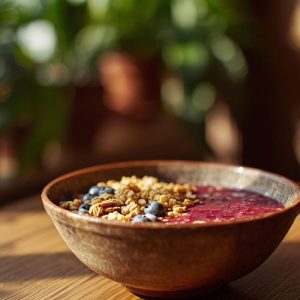
The acai bowl didn’t disappear when the temperature dropped. What changed is who is ordering it, and what they want from your acai bowl autumn menu. The customer who ordered it in January was eating for a particular feeling: something cold and sunny on a warm morning, a food that suited the season. As autumn arrives, that customer may have moved on. The one still ordering in autumn is after something different, and if the bowl you’re serving is still built for the summer moment, it may no longer be the right bowl for them.
Does the acai bowl still work in autumn?
The answer is yes, but the bowl that works in autumn is doing a different job to the one that worked in summer.
The summer customer and what they were eating for
The summer acai customer was eating for brightness. Food for a warm morning, something that felt refreshing and suited the season. The colour, the fruit, the feeling of it: all of that was part of what they were paying for, and the bowl delivered it well.
What the autumn customer wants instead
The autumn customer wants the food to do something different. Not less visually considered, but differently so. The palette that reads as appetising shifts: the deep purple of the base, the burnished gold of a serious granola, the dark fleck of cacao nibs. The bowl is still beautiful, just in a register that suits a cooler morning. And alongside that visual shift, the customer wants to feel set up for the day in a way the summer bowl wasn’t asked to do. Grounded. Sustained. Eating something that will carry them, not just refresh them. That’s a different brief for the same bowl.
That shift is worth paying attention to as you think through your broader autumn menu direction; acai is not an isolated decision.
What is the cooler-month acai customer actually eating for?
The acai berry itself doesn’t change. What changes is the role it’s playing in the bowl, and in the customer’s day.
The berry itself
The acai berry is the same food in April as it is in January. Dense in anthocyanins, the dark pigment that drives the berry’s antioxidant profile, along with healthy fats, fibre, and a flavour that sits somewhere between dark chocolate and dried blackberry. In summer, that depth was a backdrop to the brightness of the fruit and the lightness of the bowl. In autumn, it becomes the foreground. The base itself is the flavour argument, and the toppings are chosen to extend and complement it rather than to contrast with it.
The customer who keeps coming back
The autumn customers still ordering tend to be those who have already decided what the bowl does for them. Regular exercisers maintaining a training routine through the cooler months. Health-aware eaters who want a breakfast that feels considered without being complicated. Customers who have made the bowl a habit precisely because it works: it holds them, it tastes like something real, and it fits the way they want to eat. They know their bowl, they have a preference for how it’s built, and they’ll notice if it’s changed in ways that don’t serve them.
Building a bowl menu that genuinely serves this customer, one that’s structured enough to be consistent but flexible enough to reflect their preferences, is the underlying challenge the autumn transition makes visible.
Which acai bowl toppings work best in cooler months?
The toppings question is where autumn makes the most demands on the build.
Fruit: what stays, what goes
The fruit topping question is where autumn asks the most of a café. The summer fruit palette (fresh mango, passionfruit, strawberries, sliced kiwi) delivers brightness, acidity, and colour. In cooler months, most of that fruit either becomes expensive, loses quality, or both. But the cooler-month customer doesn’t want a fruit-heavy bowl anyway. They’re after density and warmth in the flavour profile, not freshness and acidity.
What works: banana holds well into autumn and adds creaminess and natural sweetness that reads as satisfying rather than light. Frozen berries, blueberries in particular, thicken the base and deepen the flavour without relying on fresh stone fruit. Coconut flakes add fat and a slight sweetness that the autumn customer reads as more substantial than a fresh fruit slice.
Base additions: beetroot powder and banana powder
Organic Beetroot Powder stirred into the acai base is worth considering for the cooler months: it deepens the colour the bowl loses when you pull the vivid summer fruit, and adds iron and folate to a bowl that the nutrition-focused customer will appreciate. Organic Banana Powder blended into the base has a similar effect on flavour density: it rounds out the dark berry notes and adds a smoothness that suits a colder morning. Neither ingredient is visible to the customer in the way a fruit fan is, but both contribute to a bowl that feels more complete in the hand and on the palate.
Cacao nibs and the autumn flavour argument
Cacao nibs on top earn their place in autumn in a way they don’t always in summer. The bitterness of raw cacao deepens the berry base rather than cutting across it, and the textural crunch they add sits well against the softness of banana and the coldness of the acai. They also look right on an autumn bowl: dark, considered, a topping that signals the bowl has been thought about.
Seeds: what changes in the autumn bowl and why
Seeds carry more weight in the autumn bowl, both in terms of quantity and what they’re being asked to deliver.
Chia, hemp, and flaxseed
Seeds work harder in the autumn bowl because the customer is asking more of the food. Chia seeds scattered over a summer bowl carry a light visual quality: small, dark, evenly distributed. In autumn, that visual function remains, but what they contribute to the eating experience becomes more important. Soluble fibre that swells in the acai base adds body; omega-3 fatty acids and a gentle filling quality that extends the bowl well past the last spoonful. The autumn customer is eating for all of that, even if they couldn’t name it exactly.
The weight of seeds in the bowl can increase without destabilising it visually or texturally. In summer the bowl’s composition was often kept spare, letting the fruit and colour do the work. In autumn a more generous scatter of seeds reads as intentional rather than heavy, and the bowl benefits from it. Hemp seeds bring a mild nuttiness and a soft bite that sits well against the creaminess of banana and the crunch of granola. They add protein and omega content without changing the bowl’s composition in any dramatic way. Flaxseeds, either whole or ground, contribute fibre and a subtle earthiness, and ground flaxseed in particular thickens the base slightly, adding body to the acai without altering the flavour.
Bee pollen
Raw Australian Bee Pollen is a topping that the cooler-month customer specifically recognises. It reads as a wellness ingredient rather than a garnish, contributes a subtle floral-honey note that suits the darker flavour profile of the autumn bowl, and signals to the health-conviction customer that the bowl has been thought about. A small amount goes a long way and it photographs well without needing to be the bowl’s central visual element.
What makes a granola work in an acai bowl?
Not all granola holds up. The frozen base is wet, and most granolas soften before the bowl is finished.
Which granola holds up
Granola in an acai bowl has one primary job: to stay crunchy. Frozen acai releases moisture as it sits, and a granola that isn’t built to resist will soften quickly. A cluster-style granola with genuine structural integrity, clumps bound with honey or maple syrup and baked to a proper crunch, holds up under that moisture stress far better than a loose, fine-crumbed granola that softens on contact. The eating experience that results is also more satisfying: the customer is after something that chews, not something that disintegrates.
Maple Nut Crunch, winner of a Gold Medal at the Great Taste Awards, delivers that structure alongside a warm maple-toasted flavour that complements the darker, richer profile of an autumn-tuned acai base. For operations serving customers with nut allergies, Super Crunch offers the same textural integrity without the nut content.
The customer still eating acai in autumn has already made the most important decision: they’ve chosen the bowl over everything else on your menu in weather that doesn’t demand it. What they want from the food now is depth, warmth in the flavour profile, and the feeling of having eaten something considered. The granola, seeds, and base ingredients that answer that brief are in Opera Foods’ acai bowl granola range, built for the bowl that earns its place year-round, not just in summer.
This article was reproduced on this site with permission from operafoods.com.au the “Café Supplies Wholesaler”.
See original article:- The Autumn Acai Bowl and Who It’s For
Comments are Closed