
Wednesday, October 21st, 2026
now browsing by day
Why A Domestic Supply Chain Is a Commercial Advantage for Foodservice Distributors
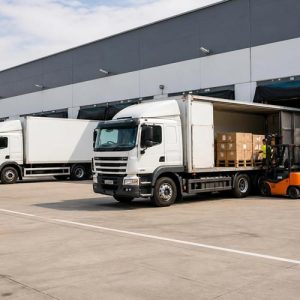
For a long time, the argument for buying Australian-made food products was about sentiment. Support local. Back Australian jobs. Feel good about what you stock. Those are real things, but they are not the reason the provenance conversation changed in 2026. The reason it changed is that Australia’s supply chain fragility stopped being theoretical and became visible.
Early in the year, a major disruption to global shipping through one of the world’s most critical maritime chokepoints cut off the flow of fuel and fertiliser inputs that Australian agriculture depends on. Fertiliser costs spiked. The government activated tier-two fuel security protocols. Grocery prices climbed. Treasury estimated that food costs could rise several percentage points almost immediately as higher input and transport costs fed through the chain.
If you are a distributor, that disruption did not just raise your wholesale costs. It exposed a question about every product in your catalogue: how deep does the domestic supply chain run?
This article examines how global input costs expose even fully domestic products, what that exposure costs distributors in pricing and continuity, and how to evaluate supply chain resilience when deciding what to carry.
How does global supply chain disruption affect Australian Made food products?
Australia produces far more food than it consumes domestically. Disruptions to food imports alone would not threaten supply in any meaningful way. The vulnerability sits one layer deeper. Australian agriculture relies heavily on imported fertiliser, and a large share of that fertiliser historically moves through a single maritime corridor. When that corridor was disrupted, the input costs of growing food in Australia rose, and those costs moved through the supply chain into wholesale and retail pricing. The same disruption affected fuel supply. Transport and logistics costs increased.
The combined effect was that even products grown, manufactured, and consumed entirely within Australia became more expensive, because the inputs required to produce and move them were subject to global supply chain risk. A product can carry the Australian Made label in the fullest sense, with Australian ingredients, Australian manufacturing and Australian packaging, and still be fully exposed if the raw inputs behind those ingredients depend on long international supply lines.
A manufacturer importing bulk raw materials from multiple international sources, processing them in Australia, and labelling the finished product as Australian Made is not doing anything misleading. The label is accurate under the law. But the supply chain behind that product has more exposure than a product where the key ingredients are sourced domestically, processed domestically, and shipped a comparatively short distance to your depot.
What does supply chain exposure cost foodservice distributors?
A product whose cost structure is tied to international commodity prices, currency movements, and global freight rates is a product whose wholesale price can move in ways you cannot predict or control. A product with a shorter, more domestic supply chain has fewer of those variables. Its pricing is not immune to cost pressure, but the pressure comes from a smaller and more visible set of inputs.
A manufacturer dependent on a single international shipping route for a critical ingredient is one disruption away from a production gap. That gap lands on you as an out-of-stock, which lands on your foodservice accounts as a menu problem. A manufacturer with a shorter supply chain has fewer points where a disruption can interrupt production.
A shorter supply chain is not a guarantee. But its risks are visible, local, and manageable in ways that a blocked shipping lane on the other side of the world is not.
How do foodservice distributors evaluate supply chain resilience?
Think of it as a practical attribute of the product, not a philosophical position.
When you look at a product in your catalogue, can you answer these questions about it? Where is it manufactured? Where do the key ingredients come from? How many links in the supply chain sit outside Australia? What happens to availability and pricing if one of those links breaks?
If you can answer those questions with short, domestic answers, you have a product whose supply you can explain and defend to your foodservice accounts. If the answers are long, international, and complicated, you have a product that might perform well on price today but carries risk you cannot see until it arrives.
A distributor whose range includes genuinely short-chain Australian products has something to say to their accounts that goes beyond sentiment. It is a statement about reliability, and reliability is worth something concrete when the alternative is a phone call explaining why a product is out of stock because of something that happened in a shipping lane ten thousand kilometres away.
Why does a domestic supply chain reduce wholesale risk?
The provenance conversation has moved. It is no longer just about consumer preference or marketing positioning. It is about whether the supply chain behind a product is resilient enough to deliver consistently when global conditions are volatile, and 2026 made clear that volatile is the baseline, not the exception.
Every product in your range sits somewhere on a spectrum from fully domestic to international. The ones at the domestic end are not just Australian Made products. They are lower-risk products to carry. The supply chain is shorter, the cost inputs are more visible, and the continuity of supply depends on fewer things you cannot control. That is worth knowing now, before the next disruption decides it for you.
Mulberry Tree granola is manufactured in NSW by Opera Foods, an Australian-owned family business. It is made from majority Australian ingredients and distributed through a domestic supply chain. If this article has you thinking about what sits behind the products in your range, request a wholesale sample from Mulberry Tree and evaluate it for yourself.
This article was reproduced on this site with permission from operafoods.com.au the “Foodservice Distributor Granola Supplier”.
See original article:- Why A Domestic Supply Chain Is a Commercial Advantage for Foodservice Distributors